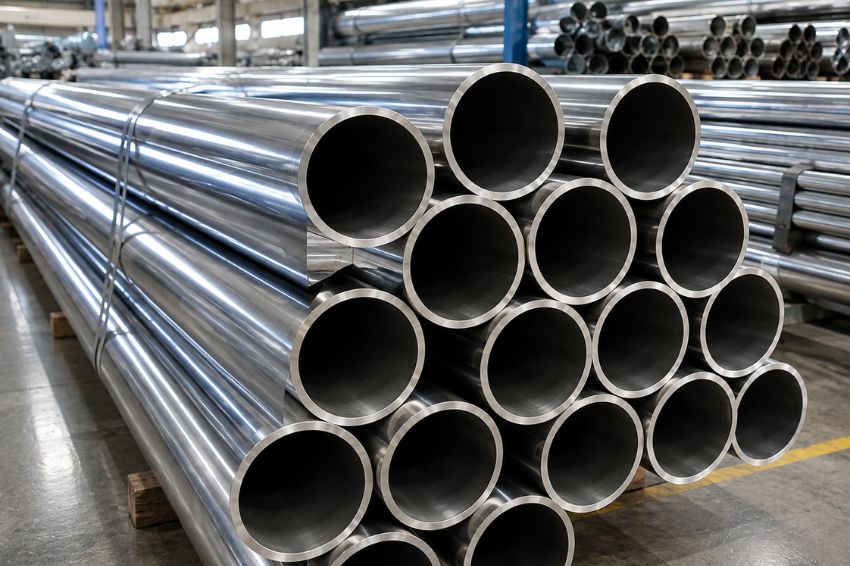
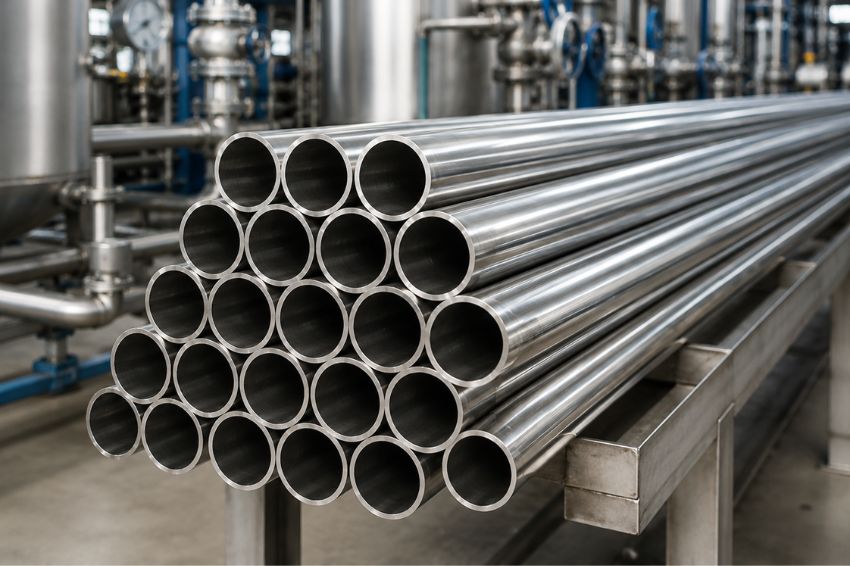
The ocean is a beautiful but brutal place for metal. Everyone who works in the marine industry is aware of the weather conditions, like seawater, excessive humidity and crushing pressures. Standard materials deteriorate under these extreme circumstances, which can result in leaks, and severe breakdowns. This is why choosing the right piping is a safety priority, not just a budget choice. Whether it is a massive ship, an offshore oil rig, or a desalination plant, the hardware needs to be tough. SS Seamless Pipes have become the top choice for these jobs. They offer the reliability and long life that welded options simply cannot match. In this blog, we will look at the specific corrosion challenges of the sea and how these pipes solve them. We also cover the best grades to use and why your choice of an SS Seamless Pipes Supplier, Piyush Steel, makes all the difference in performance.
Understanding Corrosion in Marine Environments
Seawater is one of the most corrosive liquids on the planet because of its high salt content and oxygen levels. When metal stays in contact with salty mist or water, chemical reactions start immediately to break the material down.
Uniform Corrosion: This is the most common type where the entire surface of the pipe starts to rust evenly. Continuous salt exposure wears the metal thin over time, eventually leading to structural weakness.
Pitting Corrosion: Chloride ions in the water attack certain parts of the metal. This makes small, deep holes or pits, that can go all the way through a pipe wall, even if the rest of the pipe seems good.
Crevice Corrosion: This occurs in restricted areas like under gaskets, fasteners or joints. Seawater accumulates in these crevices and forms stagnant and, eroding the metal faster than on open surfaces.
Stress Corrosion Cracking (SCC): When a pipe is under high pressure or stress, and it gets exposed to salt, it can develop small cracks. These cracks spread quickly, and might cause a pipe to rupture with no warning.
Galvanic Corrosion: This occurs when two different types of metal touch each other in saltwater. The saltwater acts like a battery fluid, causing one of the metals to corrode at an accelerated rate.
The real-world results of these issues are scary. You face sudden leaks, total equipment failure, and massive repair bills. Safety hazards for the crew also go up when systems fail. This is why marine engineers look for materials that can handle chloride-rich water and moving parts without breaking down.
What Makes SS Seamless Pipes Different?
The way a pipe is made changes how it handles the ocean. SS Seamless Pipes are created by piercing a solid billet of steel, meaning they have no longitudinal weld seam. This lack of a weld is a massive advantage because welds are usually the first place corrosion starts or cracks form. In a seamless pipe, the strength is uniform throughout the entire body. Stainless steel is perfect for the sea because it contains chromium. This chromium reacts with oxygen to form a very thin, invisible “passive layer” on the surface. This layer acts like a shield against rust. In high-pressure offshore jobs, the solid structure of a seamless pipe provides a level of reliability that welded pipes can’t provide.
Commonly Used Marine Stainless Steel Grades
Selecting the right grade is about balancing cost with the level of salt exposure.
304 / 304L: This is the standard grade for general use. It works well for parts of a ship that aren’t constantly soaked in seawater but still face salty air and humidity.
316 / 316L: This is the “marine grade” classic. It has added molybdenum, which helps it fight off the “pitting” caused by chlorides in the water much better than 304.
Duplex (2205): This grade is a hybrid that offers double the strength of standard stainless steel. It has incredible resistance to stress cracking and is used for heavy-duty marine parts.
Super Duplex: This is for the toughest deep-sea environments. It handles extreme pressure and very high salt levels without flinching, making it ideal for subsea equipment.
Key Corrosion-Resistant Properties of SS Seamless Pipes
The chemistry and build of these pipes give them a natural edge in the water. They don’t just sit there; they actively resist the environment.
Chloride Resistance
Salt is mostly sodium chloride, and chloride is the enemy of metal. Molybdenum-rich grades like 316 and Duplex pipes are designed to stop chloride from starting those tiny pits. This makes them the go-to for seawater cooling lines and desalination plants.
High Chemical Stability
The ocean isn’t just salt; it can be acidic or alkaline depending on the location and depth. SS Seamless Pipes stay stable and don’t react with these chemicals. This is also helpful when ships carry chemicals or wastewater as cargo.
Oxide Layer Self-Healing Capability
One of the coolest things about stainless steel is its ability to heal. If a pipe is scratched during installation, the chromium inside reacts with oxygen to regenerate the protective covering. This is not the case with painted carbon steel, which requires regular touch-ups.
High Strength & Fatigue Resistance
The seamless design means there is no weak point. When waves hit a ship, or ocean currents pull at a subsea pipe, the metal can flex, and handle the vibration. This fatigue resistance is vital for long-term subsea pipelines.
Resistance to Microbiologically Influenced Corrosion (MIC)
Believe it or not, tiny marine bacteria can eat through some metals. They create colonies that produce corrosive acids. Stainless steel is much smoother and harder for these bacteria to grip, which stops this “bio-corrosion” before it starts.
Applications of SS Seamless Pipes in the Marine Industry
These pipes are used everywhere from the engine room to the bottom of the ocean floor.
Shipbuilding: You will find these pipes in fuel lines, hydraulic systems, and exhaust systems. Since they are seamless, they handle the high-pressure fluids needed to move a massive ship safely.
Offshore Oil & Gas Platforms: Rigs use these pipes for processing oil and gas on the surface and for “risers” that bring fluids up from the sea floor. They handle the salt spray and the internal pressure of the oil.
Desalination & Water Treatment: Turning seawater into drinking water involves high-pressure filters. Seamless pipes are used because they don’t scale up or pit when handling concentrated brine.
Subsea Pipelines: For deep-water work, Duplex and Super Duplex pipes are the standard. They resist the massive weight of the ocean and the constant movement of underwater currents.
Ports & Harbours: Fire-fighting systems on docks use these pipes. Since they stay ready even when exposed to the “splash zone,” they are reliable in emergencies.
Advantages of Using SS Seamless Pipes in Marine Applications
Using these pipes saves a lot of headaches over the long run. Even if the initial cost is higher, the “life-cycle” cost is much lower.
Superior Corrosion Resistance: They last for decades, not years. This means fewer stops for repairs and lower costs for replacing old lines.
Improved Safety: No weld means one less thing to worry about. Under high pressure, a weld is a potential failure point, but a seamless pipe is solid and secure.
Low Maintenance Requirements: You don’t need to wrap them in plastic or paint them every year. The self-healing layer does the heavy lifting for you.
High Pressure & Temperature Handling: Whether it is hot engine exhaust or freezing deep-sea water, these pipes keep their shape and strength.
Smooth Internal Surface: The inside of the pipe is very smooth. This helps fluids flow faster with less friction and prevents gunk from building up inside the pipe.
Factors to Consider When Choosing SS Seamless Pipes
You can’t just pick any pipe; you have to match the tool to the task.
Grade Selection: Check the environment. If it is just for deck railings, 304 might work. If it is for a seawater pump, one will definitely need 316 or Duplex.
Pitting Resistance Equivalent Number (PREN): A mathematical formula that provides a “score” to a pipe based on its ability to resist pits. A higher number indicates better protection in salt water.
Wall Thickness: Deep-sea pipes require larger walls to prevent being crushed by water pressure. Always check the pressure rating before purchasing.
Certification and Standards: Make sure the pipes comply with ASTM or API specifications. These certifications indicate that the pipe was tested and is safe for marine usage.
Supplier Quality: Not all steel is the same. It is vital to buy from a trusted SS Seamless Pipes manufacturer – Piyush Steel to ensure the metal has the right chemical mix and no hidden flaws.
Choosing the correct material for marine construction is all about combating the ocean’s force. SS Seamless Pipes are the finest tool for this battle as they are extremely strong and naturally resistant to corrosion and salt damage. By removing the weld seam, these pipes offer a level of safety and longevity that other materials just cannot match. When you invest in high-quality stainless steel, you are cutting down on future maintenance and protecting your crew and equipment. Selecting the appropriate grade for the specific project ensures that marine activities remain efficient and leak-free for years to come.
Contact Piyush Steel, a trusted manufacturer of SS Seamless Pipes for high-quality materials.