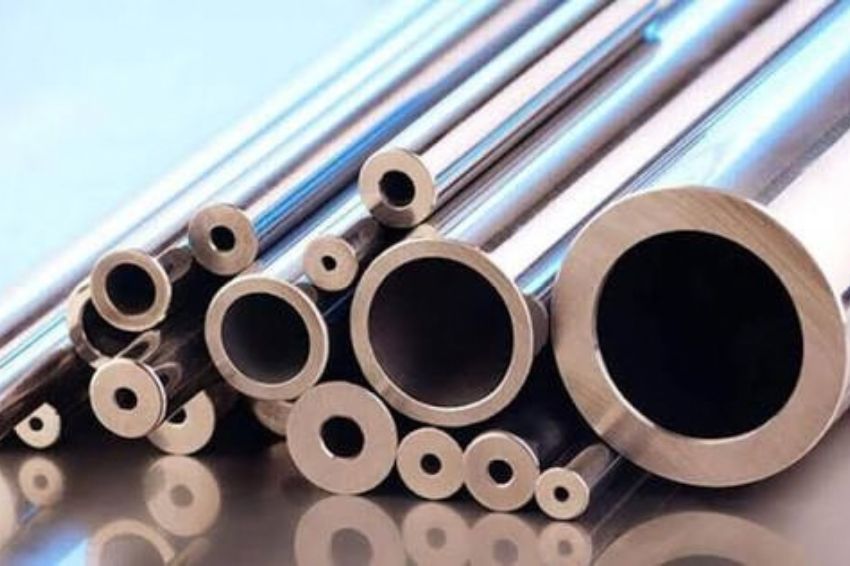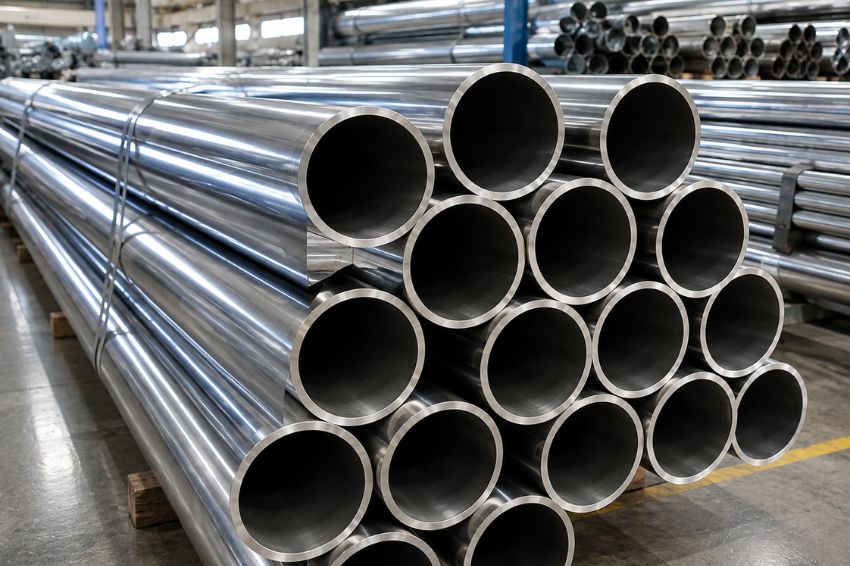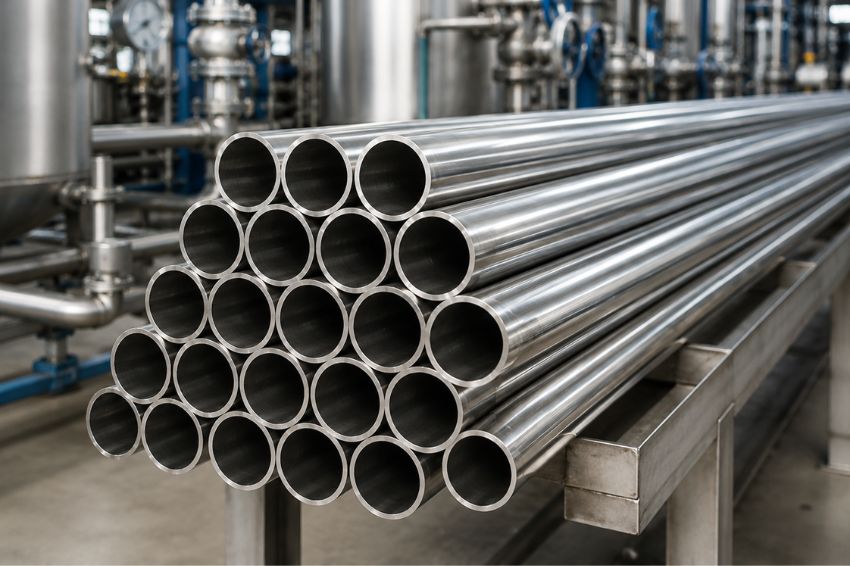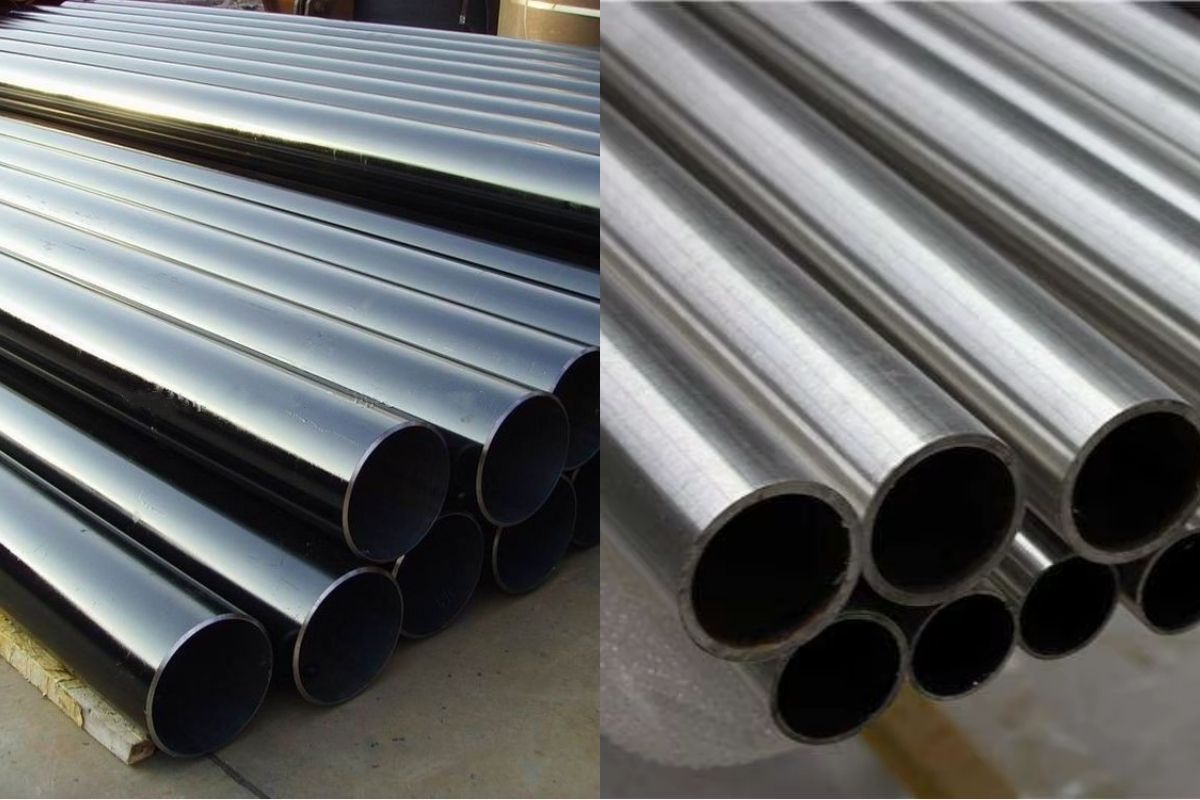
The global steel pipe market is essential for the oil and gas, power, water supply, chemical plant, and heavy industry sectors. The two main types are carbon steel pipe and stainless steel pipe. Each has a specific strength level, corrosion resistance, service life and price point. Steel pipes are essential to fundamental infrastructure in the energy, transportation, and process industries, with continuous demand driven by urban expansion and new energy projects. Choosing the right ASTM A106 Grade B carbon steel pipe supplier is essential, as pipe failure causes downtime and safety risks. Engineers assess pressure, temperature, corrosion exposure, and life cycle cost before final material approval to ensure long-term plant reliability.
What Are Carbon Steel and Stainless Steel Pipes?
Steel pipes are mainly divided into carbon steel and stainless steel types. Both serve industrial systems, but their chemical compositions differ.
Carbon Steel Pipes
A Carbon Steel Pipe is made primarily from iron and carbon. Small amounts of manganese, silicon, and other elements may be added. It offers high strength and good load-bearing capacity. These pipes are available in seamless and welded types. Seamless pipes are formed without joints that meet high-pressure service. Welded pipes are cost-effective and common in structural use. The common standards include ASTM A53, API 5L and ASTM A106 Grade B Carbon Steel Pipe. Grades such as Gr. B and X42 to X70 are widely used in pipelines and structural systems.
Stainless Steel Pipes
A Stainless Steel Pipe contains iron, chromium, and often nickel. Chromium, usually above 10.5%, forms a protective oxide layer. This layer prevents rust and surface damage. Stainless pipes are also produced in seamless and welded forms. They are used where corrosion resistance and clean surfaces matter. Austenitic, ferritic, and duplex grades are among the most common types. ASTM A312, ASTM A213, and ASTM A269 are some of the most important international standards. The most popular grades are 304, 304L, 316, and 316L, and they all have various chemical and temperature conditions.
Key Differences Between Carbon Steel and Stainless Steel Pipes
Material choice depends on strength, corrosion level, budget and service life. A clear comparison helps in selecting the right option.
Material Properties
Carbon Steel Pipe: Carbon steel pipes have strong tensile strength and impact resistance. It works effectively under high mechanical loads. However, it can corrode if exposed to dampness or chemicals without a covering.
Stainless Steel Pipe: A stainless steel pipe is highly resistant to rust, as it contains chromium in it. It operates well in humid and acidic conditions. Some grades are strong, but their yield strength is slightly lower than that of carbon steel.
Cost Comparison
Carbon Steel Pipe: The initial cost of a Carbon Steel Pipe is lower. It suits large-diameter pipelines where budget control is critical. However, coatings, painting, and periodic maintenance add to long-term cost.
Stainless Steel Pipe: A Stainless Steel Pipe has a higher upfront price. The alloy content increases the raw material cost. Still, low maintenance and longer life often balance the investment over time.
Performance in Different Environments
Carbon Steel Pipe: In dry and non-corrosive settings, Carbon Steel Pipe performs efficiently. It handles high pressure and temperature when protected by coatings. In corrosive zones, it may require internal lining.
Stainless Steel Pipe: A Stainless Steel Pipe performs better in chemical plants and marine zones. It resists pitting and stress corrosion cracking in many cases. High-temperature grades also support heat exchangers and boilers.
Global Demand Trends
Global demand for industrial pipes is rising as the infrastructure, energy, and manufacturing industries expand in developed and emerging markets. Material selection is primarily influenced by application requirements, operational environments, and long-term performance expectations. Below is a clear overview of demand trends for carbon steel and stainless steel pipes.
Carbon Steel Pipes
Carbon steel pipes are used extensively due to their strength, durability, and low cost. These pipes are in high demand for large-scale infrastructure and energy projects worldwide. The oil and gas industry is a significant consumer of carbon steel pipes. These pipes are used for drilling, crude oil and natural gas transportation, and refinery operations, as they can endure high pressure and mechanical stress. Carbon steel pipes are essential parts of water transport and distribution systems. They are used in large-scale municipal pipes and irrigation systems, where structural stability is essential. Carbon steel pipes are used in construction as structural elements, such as piling and load-bearing constructions. Rapid urbanisation and industrial expansion continue to fuel stable demand in this segment.
Stainless Steel Pipes
Stainless steel pipes are preferred in industries that demand corrosion resistance, cleanliness, and a long service life. Their demand is growing in industries where operational safety and material purity are crucial. The chemical and petrochemical industries are heavy users of stainless steel pipes. These pipes are resistant to corrosion in strong chemicals, acids, and high-temperature environments, which makes them ideal for processing facilities and refineries. Stainless steel pipes are commonly used for fluid transport systems in the food and beverage industry due to their ease of cleaning and maintenance. Their smooth surface increases product safety and hygiene compliance. High-pressure systems, such as power plants and specialised industrial operations, also use stainless steel pipes. Their capacity to withstand high temperatures and pressures ensures reliable and safe system operation.
Industry Usage by Sector
Different industries select pipe materials based on operating risk and fluid type. Each sector follows strict standards and codes.
Carbon Steel Pipe
Oil & Gas Pipelines: Carbon Steel Pipe is widely used for crude oil and gas transmission. It handles high pressure and long-distance transport.
Water & Sewage Infrastructure: Municipal projects use carbon steel for water lines. Protective coatings reduce corrosion in buried systems.
Construction and Structural Applications: Steel pipes support piling, columns, and heavy frameworks. Strength and cost control make carbon steel suitable.
Power Generation: Thermal plants use carbon steel in steam lines. It supports high pressure when proper grades are selected.
Stainless Steel Pipe
Chemical Processing Plants: Stainless Steel Pipe resists acids and chemical fluids. It maintains strength in reactive environments.
Pharmaceuticals and Biotech: Clean and smooth internal surfaces prevent contamination. Austenitic grades are common in sterile systems.
Food & Beverage Processing: Stainless pipes support hygienic transport of liquids. They resist rust and allow easy cleaning.
Marine & Offshore Environments: Saltwater exposure demands corrosion-resistant materials. Stainless steel performs better than plain carbon steel.
Heat Exchangers and High-Temperature Systems: High-grade stainless pipes withstand elevated heat. They maintain structure in demanding thermal cycles.
Both carbon steel pipe and stainless steel pipe serve significant functions in the global industry. Carbon steel provides strength and cost-effectiveness for pipelines and structural applications. Stainless steel has high corrosion resistance and a long service life in chemical and hygienic systems. Material selection is determined by pressure, environmental factors, and life cycle costs. A reputable stainless steel pipe manufacturer ensures quality compliance and reliable delivery. Contact Piyush Steel today to discuss the project requirements to get reliable piping solutions supported by industry expertise.