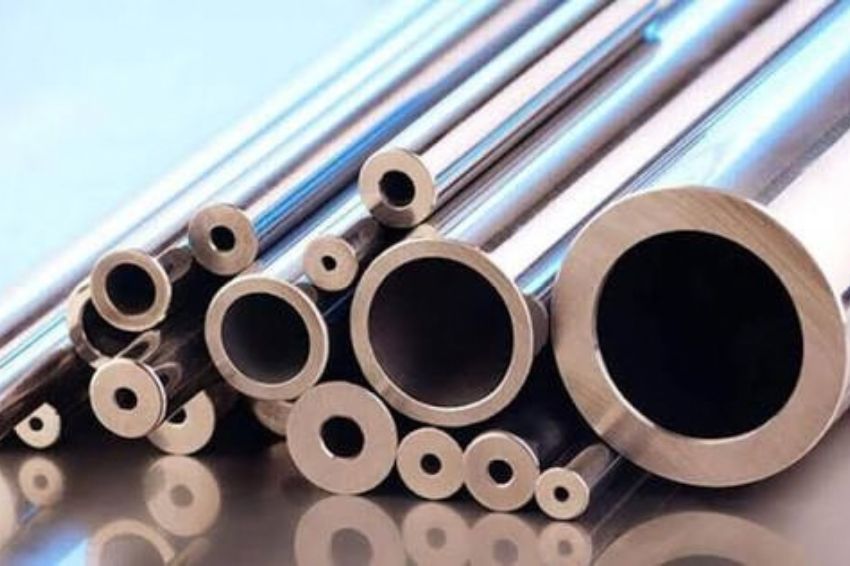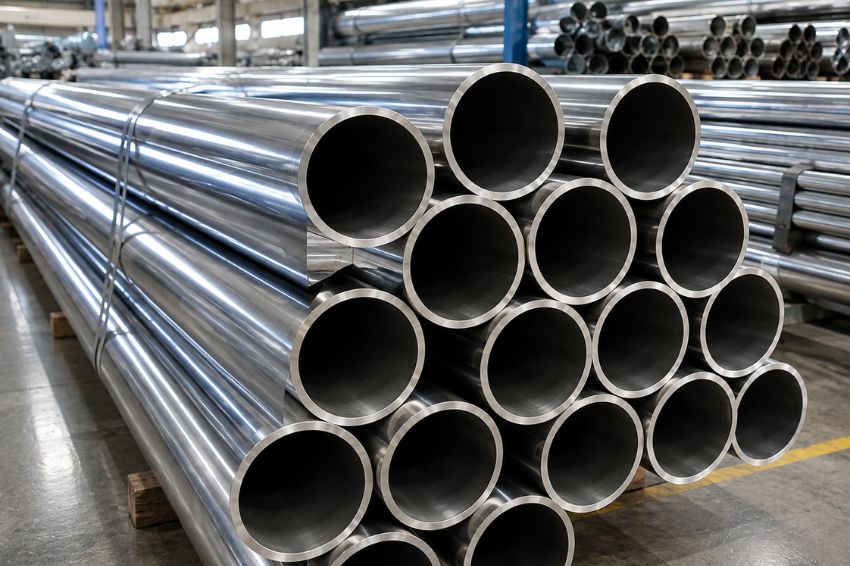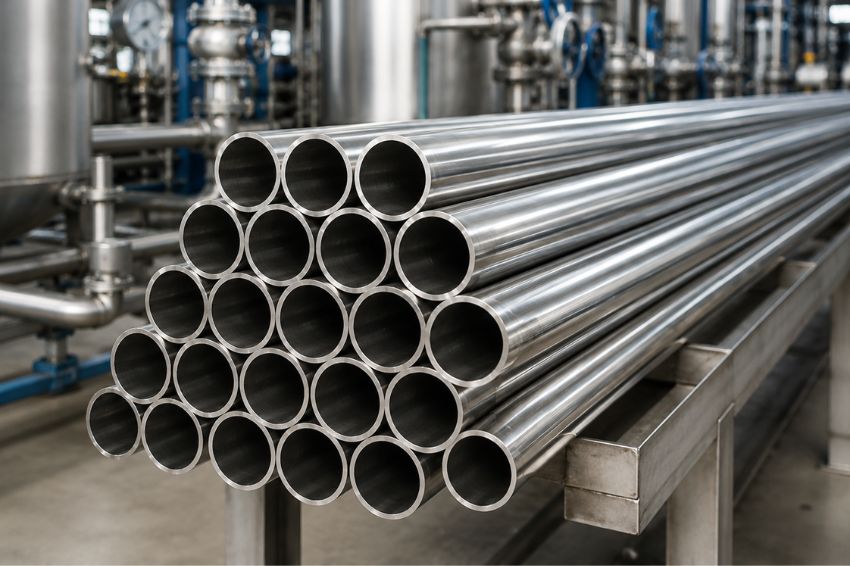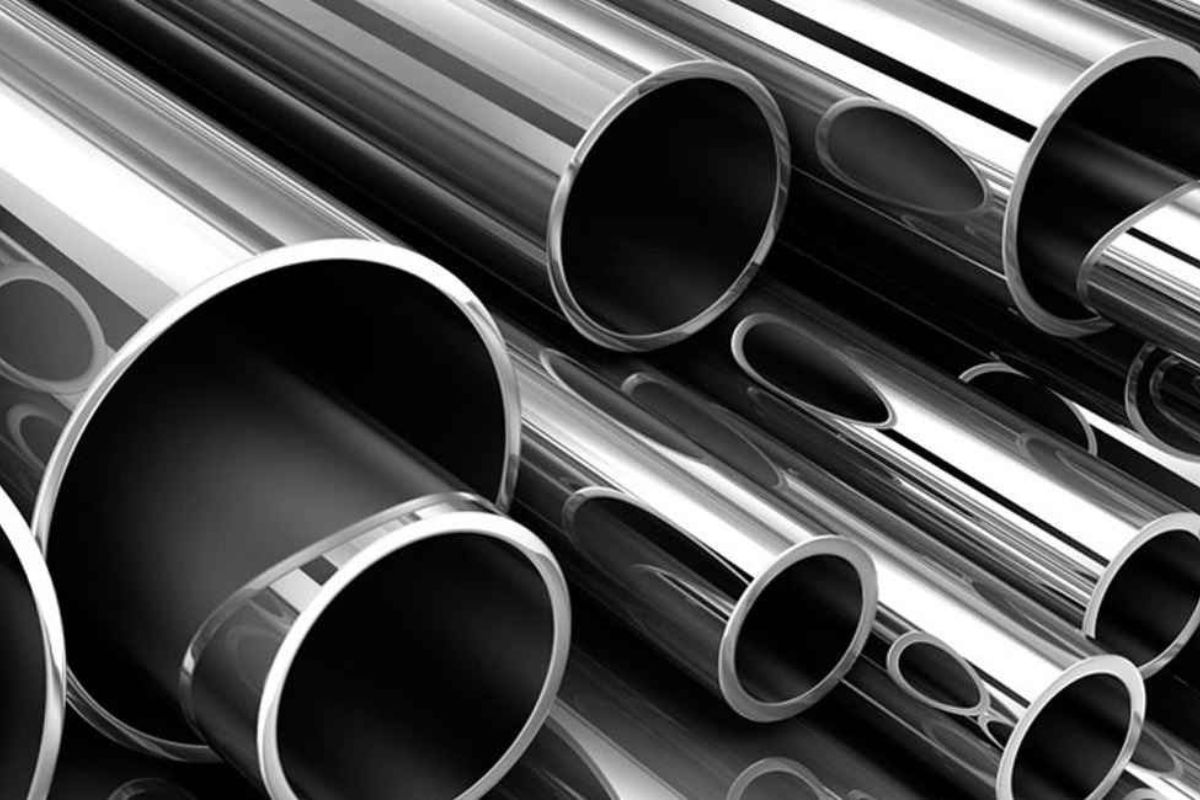
321 stainless steel pipe is a titanium-stabilized austenitic stainless steel that performs reliably under severe service conditions. Titanium is added to 321 SS pipe to stabilize it and provide excellent resistance to intergranular corrosion and ensure stability during exposure to elevated temperatures. It also has excellent oxidation resistance at high temperature and will maintain its strength and surface integrity over time. This corrosion resistance and heat resistance combination makes this stainless steel pipe a frequent choice for industries to use for high-temperature applications for long-term use.
What Is 321 Stainless Steel Pipe?
SS 321 carries 17% chromium, 9% nickel, and a titanium addition at a minimum of five times the carbon content. That titanium binds with carbon before it can combine with chromium at grain boundaries during welding or prolonged heat exposure, preventing intergranular corrosion.
Compare that to SS 304, which carries no titanium. Sustained temperatures between 800°F and 1500°F cause carbon in 304 to migrate toward grain boundaries and strip those zones of corrosion protection. SS 321 eliminates this risk entirely. It maintains tensile strength above 515 MPa at ambient and retains workable strength through thermal cycles that sensitize non-stabilized grades.
For full dimensional and grade details, please visit the different types of Stainless Steel 321 Pipes available from Piyush Steel, including welded, seamless, welded and ERW pipes in schedule 10S to 80S.
Key Advantages of 321 Stainless Steel Pipe
Excellent High-Temperature Resistance
321 SS pipe performs continuously at temperatures up to 815°C without phase transformation or oxidation. Heat exchangers, exhaust manifolds cycling between ambient and 750°C, and furnace components in constant radiant heat all depend on this ceiling. It does not need recrystallization, and there is no unexpected brittleness between cycles.
Resistance to Intergranular Corrosion
Titanium stabilization prevents carbide precipitation in the weld heat-affected zones. Post-weld annealing, often required for 304 to restore corrosion resistance, is unnecessary for 321. Weld joints in 321 stainless steel pipe retain the same corrosion resistance as the parent material, cutting fabrication time on large-bore piping systems.
Strong Oxidation Resistance
Above 600°C, oxygen attack on unprotected steel accelerates sharply. SS 321 forms a stable chromium oxide layer that resists spalling during thermal cycling. Thermal processing equipment, kilns, and combustion chambers use this grade for liner pipe and transfer tubes where oxide integrity cannot fail between shutdowns.
Good Mechanical Strength
321 SS pipe have a minimum yield strength of 205 MPa and tensile strength of 515 MPa at room temperature. The stabilized grain structure (Ti) is more resistant to creep than the non-stabilized grades under cyclic thermal loading and provides long service life in boiler superheater tubing at temperatures above 550°C.
Excellent Fabrication and Weldability
321 stainless steel pipe bends, cuts, and welds using standard austenitic procedures without pre-heat or post-weld heat treatment in most applications. Fabricators working on exhaust headers, pressure vessel nozzles, or complex piping spools find the grade predictable under both TIG and MIG processes.
Industrial Applications of 321 SS Pipe
Aerospace Industry
Aircraft exhaust manifolds cycle from ambient to above 700°C within minutes of ignition. Stainless steel pipe in 321 grade handles this thermal shock without fatigue cracking at weld joints. Firewall assemblies and afterburner ducting also rely on it for sustained oxidation resistance at thin-wall sections.
Chemical Processing Industry
321 SS pipe is used for heat exchanger tube bundles and shell-side nozzles for chloride-bearing streams or sulfur compounds at high temperatures. Pressure piping at 400 to 700 °C stays in the stabilized range of this grade, avoiding the sensitization failures seen in non-stabilized alloys after long-term service.
Oil and Gas Industry
Refinery overhead lines, vacuum tower transfer lines, and crude distillation column piping all encounter temperatures above 400°C with sulfurous compounds in the stream. 321 SS pipe resists polythionic acid stress corrosion cracking, a specific failure mode that has caused major unplanned shutdowns when lower grades were substituted.
Power Generation Plants
Boiler superheater tubing and reheater sections in coal and gas-fired plants operate at steam temperatures between 540°C and 600°C at pressures above 140 bar. 321 SS pipe meets these conditions without requiring expensive nickel alloy alternatives, making it the practical choice for superheater and feedwater heater systems.
Automotive and Exhaust Systems
Exhaust manifolds on high-performance engines reach wall temperatures above 700°C under load. Thermal oxidizers processing volatile organic compounds at 760°C to 820°C need pipes that survive 24-hour continuous operation. Both applications prefer 321 stainless steel pipe over 409 ferritic grades because the austenitic structure tolerates weld joint thermal cycling without cracking.
Food Processing Equipment
Hygienic piping in breweries, dairy plants, and pharmaceutical facilities endures daily clean-in-place cycles using caustic soda and hot water at 85°C to 121°C, followed by steam sterilization. 321 SS pipe handles these thermal transitions cleanly, and pasteurizers, retort systems, and evaporator tubes depend on its fatigue resistance across years of daily cycling.
Why Choose 321 SS Pipe for High-Temperature Applications?
Refineries replacing sensitized 304 pipes in high-temperature transfer lines routinely switch to 321 and extend service life from two to three years per section up to ten or more years before first inspection. That reduction in replacement frequency cuts both material costs and the labor involved in scaffolded shutdowns.
Thermal cycling environments punish grades without titanium stabilization at every weld zone. SS 321 holds grain boundary integrity across hundreds of thermal cycles, making it cost-effective not just on material price but across the full installation lifecycle. For procurement teams, the avoided downtime and lower post-weld treatment costs offset the modest premium over 304.
Conclusion
321 stainless steel pipe combines titanium stabilization, oxidation resistance up to 815°C, tensile strength above 515 MPa, and field-weldability without post-weld annealing. Aerospace, chemical processing, oil and gas, power generation, automotive, and food processing industries all depend on these properties in demanding daily service. Piyush Steel stocks 321 SS pipe in seamless and welded configurations, certified to ISO 9001:2008 and supplied to industrial units across global markets.
Contact Piyush Steel for material test reports, dimensional specifications, and custom cut lengths on 321 stainless steel pipe.