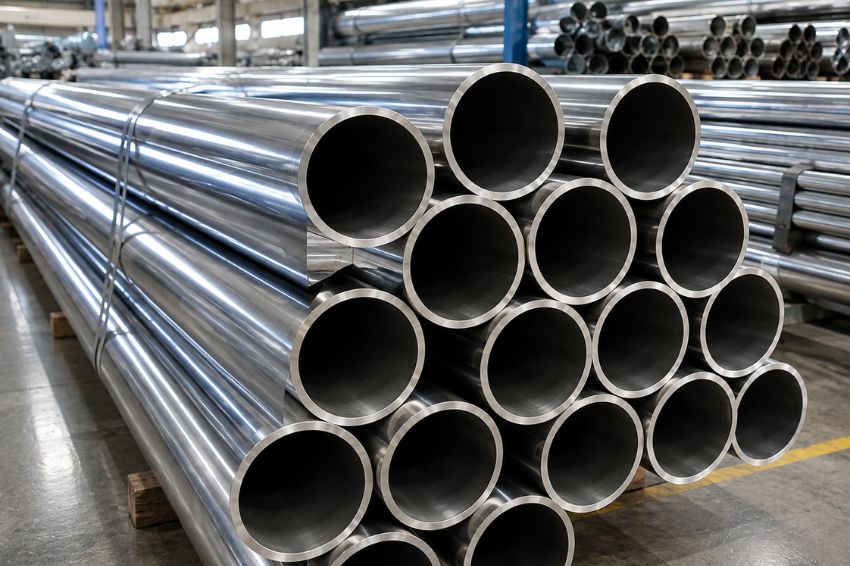
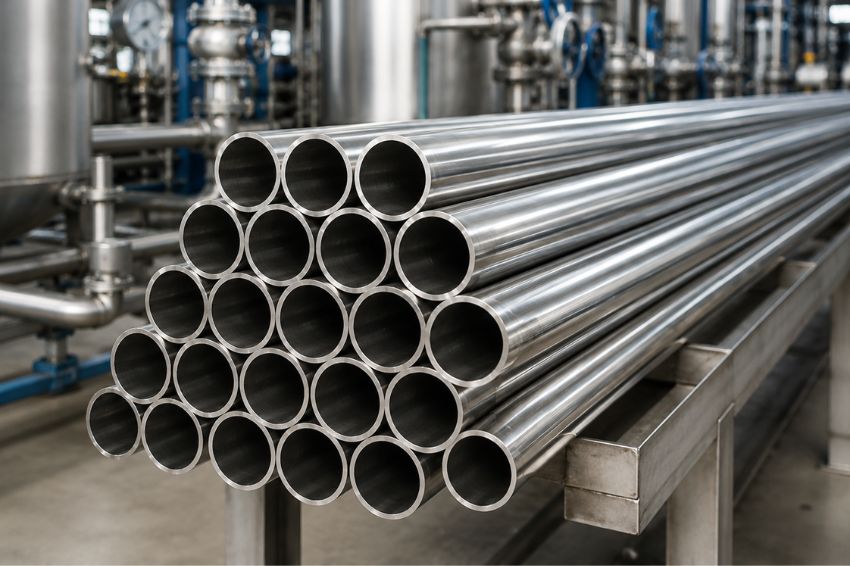
Duplex stainless steel pipe systems have quietly become the backbone of many high-pressure, high-corrosion industries. From offshore rigs to chemical processing lines, these pipes carry fluids that would quickly damage ordinary stainless steel. Among all duplex grades, Duplex 2205 and Super Duplex 2507 stand out. Engineers talk about them often, sometimes in the same breath, sometimes as two very different tools for two very different jobs. Buyers also weigh them up, mostly because the price gap can be real, and the performance gap can be even bigger.
This blog looks at how these two grades behave in real pipe systems, where they are used, and why choosing the right one matters so much.
Looking for a trusted Duplex & Super Duplex pipe supplier? We at Piyush Steel are ready to support your projects worldwide.
What Are Duplex Stainless Steel Pipe Systems?
Duplex stainless steel pipes are made from steel that has two metal structures inside it, ferrite and austenite. This combination is what gives duplex its name. In simple terms, this dual structure lets the pipe take higher stress while also resisting corrosion far better than regular stainless steel. It is a balance that works well in plants where pipes face pressure, heat, and aggressive chemicals at the same time.
Because of this structure, duplex pipe systems can be made thinner while still carrying heavy loads. That saves weight, which helps on offshore platforms and large pipelines. Corrosion cracking, a common problem in harsh fluids, is also reduced. These general strengths are why grades like 2205 and 2507 have become so widely used across industries that cannot afford pipe failure.
Detailed Overview of Duplex 2205 (UNS S32205 / S31803)
Duplex 2205 is often seen as the workhorse of the duplex family. Its chemical composition includes 21-23% chromium, 4.5-6.5% nickel, 2.5-3.5% molybdenum, and 0.14-0.20% nitrogen, which together create strong resistance to rust, pitting, and cracking. At the same time, it has much higher strength than standard 300-series stainless steel, so engineers can design lighter and more compact pipe systems.
In day-to-day use, 2205 performs well in chloride-rich fluids, which makes it suitable for seawater systems, chemical tanks, and pipelines in coastal plants. It also keeps its shape under pressure, which is important in long pipe runs. Because it offers a good balance of cost and performance, Duplex 2205 is widely chosen for oil and gas lines, process piping, pressure vessels, and many industrial structures.
Detailed Overview of Super Duplex 2507 (UNS S32750 / S32760)
Super Duplex 2507 takes everything that 2205 does and pushes it further. Its alloy content is higher, especially in chromium (24-26%), molybdenum (3-5%), and nitrogen (0.24-0.32%), and this gives it much stronger resistance to pitting and crevice corrosion. In simple words, it stands up better when salt, chemicals, and heat are all working against the pipe.
The strength of 2507 is also higher than that of 2205. This means pipes can be used at higher pressures without thick walls. In places where failure would be costly or dangerous, that extra margin matters. You see Super Duplex 2507 in offshore oil platforms, deep-sea pipelines, and desalination plants where seawater is under constant movement. These are not gentle environments, and 2507 was built for exactly that kind of abuse.
Duplex 2205 vs Super Duplex 2507 – Key Differences
| Feature | Duplex 2205 | Super Duplex 2507 |
| Chemical Composition | 21-23% chromium and 2.5-3.5% molybdenum with 0.14-0.20% nitrogen | 24-26% chromium, 3-5% molybdenum, and 0.24-0.32% nitrogen |
| Mechanical Strength | Much stronger than standard stainless steel | Stronger than 2205, handles higher pressure |
| Corrosion Resistance | Very good in most industrial environments | Excellent, especially in severe chloride and seawater |
| Temperature Capabilities | Suitable for many high-temperature systems | Handles higher stress at elevated temperatures |
| Cost | More affordable | Higher cost due to alloy content |
| Application Fit | General industrial and process piping | Extreme marine and offshore conditions |
Applications of Duplex 2205
Duplex 2205 is used across a wide range of industries because it hits a practical middle ground. In oil and gas processing plants, it carries hot, pressurised, and corrosive fluids. Chemical plants rely on it for reactors and transfer lines where acids and salts are always present. You will also find it in pressure vessels, pipelines, and structural parts where strength and corrosion resistance both matter.
Water treatment systems use 2205 because it resists chloride attack far better than ordinary stainless steel. In many building and industrial projects, it becomes the go-to choice when long service life is needed without moving into the higher cost of super duplex grades.
Applications of Super Duplex 2507
Super Duplex 2507 is chosen when the environment becomes truly harsh. Offshore oil and gas platforms use it for topside piping and subsea systems that sit in seawater day after day. Subsea pipelines depend on its high strength and resistance to cracking under pressure.
Desalination plants also rely on 2507 because hot, salty water is one of the most aggressive fluids a pipe can face. Marine structures, seawater cooling systems, and shipboard piping all make use of this grade. It costs more, but in these settings, replacement or failure would cost far more than the pipe itself.
How to Choose Between Duplex 2205 and Super Duplex 2507
The choice comes down to the environment your pipe will see. If chloride levels are moderate, temperatures are controlled, and pressure is high but manageable, Duplex 2205 usually does the job well.
When chloride content rises, when seawater is involved, or when pressure and heat start pushing limits, Super Duplex 2507 becomes the safer option. Budget always plays a role, but so does downtime and risk. Matching the grade to the real working conditions is what protects the system in the long run.
At Piyush Steel, we provide Duplex & Super Duplex pipes that meet demanding industrial needs, backed by decades of supply experience.
Conclusion
Duplex 2205 and Super Duplex 2507 may look similar on paper, but they serve different levels of severity in the field. One suits demanding industrial work, the other steps in when corrosion and pressure reach extremes. Choosing the right grade is not just about price, it is about how long the system will run without trouble. With the right material, pipe systems stay strong, safe, and reliable for years.