A material’s ability to withstand years of exposure to saltwater without losing structural integrity is the sole criterion used by marine engineers. Corrosion resistance and long-term durability decide that outcome, and few materials answer requirements as consistently as hexagon pipes. This article covers what makes them different and where they fit best in marine applications.
Hexagon Pipes: What are They?
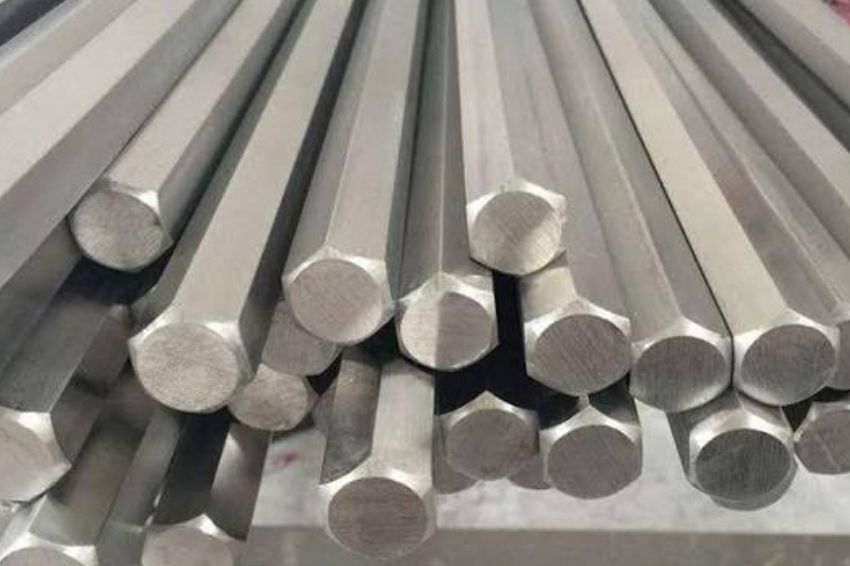
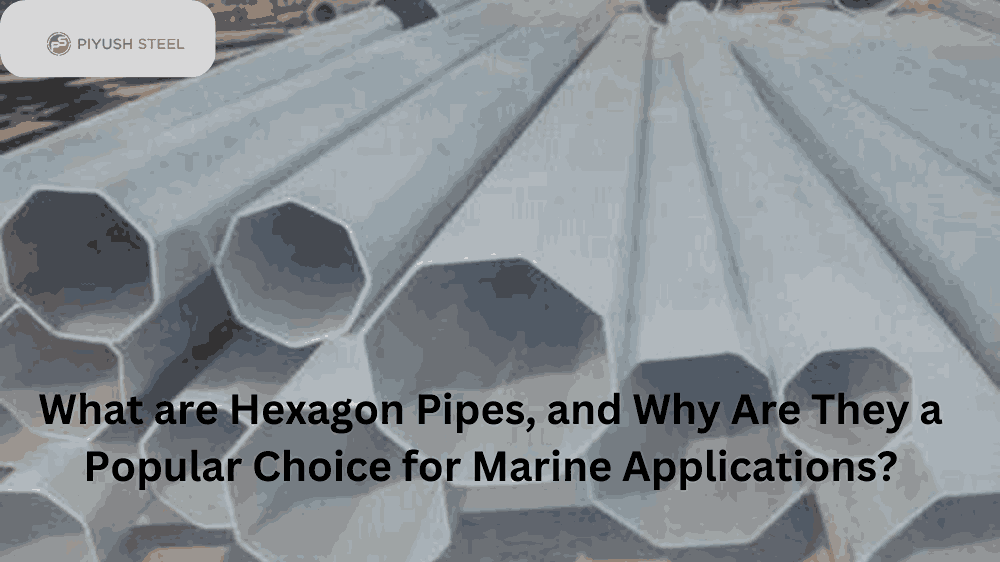
A hexagon pipe is a steel tube with a six-sided cross-section, built as an alternative to round tubing wherever space is tight or torsional load runs high. Diameters run smaller than standard round pipe for the same wall strength. Manufacturers cold-draw or hot-extrude the shape from round billet stock, then anneal and straighten it to final dimensions before it reaches a fabricator’s shop floor. Carbon steel, alloy steel, and 304 or 316 stainless steel are the three material families used most, with the stainless grades reserved for the harsher, more corrosive settings found in demanding marine applications.
Characteristics of Hexagon Pipes
In marine applications, hexagon pipes bring three advantages over round pipes:
- The six-sided cross-section increases the section modulus compared to a round tube of equal weight, allowing the profile to handle higher bending and torsional loads while reducing overall structure weight.
- Stainless and alloy grades resist chloride-driven pitting and crevice corrosion. That’s why the profile holds up through the saltwater immersion and splash-zone cycling common to marine applications, conditions that would pit ordinary carbon steel within a season.
- Flat faces grip a vice or wrench more securely than a round profile does, so fabricators machine, weld, and assemble hex tubes faster on custom runs, cutting labour hours on tight project timelines.
Applications of Hexagon Pipes in Marine Engineering
Offshore operators fit hexagon pipes into oil rigs, subsea pipelines, floating platforms, and underwater vehicles: anywhere a tubing connection needs a small footprint alongside high strength. Hydraulic line fittings, spacers, and bushings account for much of that use. Custom-machined hex tube components also turn up in the high-stress zones common to many marine applications, including crossover connections on production platforms, pipeline riser systems, and buoyancy modules that need a strong, close-tolerance fit.
Why Hexagon Pipes are a Popular Choice for Marine Applications
Three properties drive that popularity: strength, corrosion resistance, and shape efficiency. The hexagonal profile packs more strength per kilogram into a cramped equipment bay. Flat faces simplify welding and machining, so fabrication teams don’t fall behind on tight offshore schedules. Marine applications that combine vibration, chloride exposure, and confined space punish weaker materials quickly, and a well-specified hex profile holds its rating where a round tube would need a heavier wall to match it. That weight saving matters on any offshore structure where every kilogram carries a cost.
Conclusion:
Round pipe still covers plenty of marine systems, but tight equipment bays, chloride-rich water, and high cyclic loads change that calculation. Hexagon pipes respond with a smaller footprint, three common material grades suited to saltwater service, and a profile that machinists finish quickly on custom runs. For marine applications such as offshore platforms, subsea pipelines, and buoyancy systems, that mix of strength and corrosion resistance is worth specifying at the design stage.